Pound For Pound
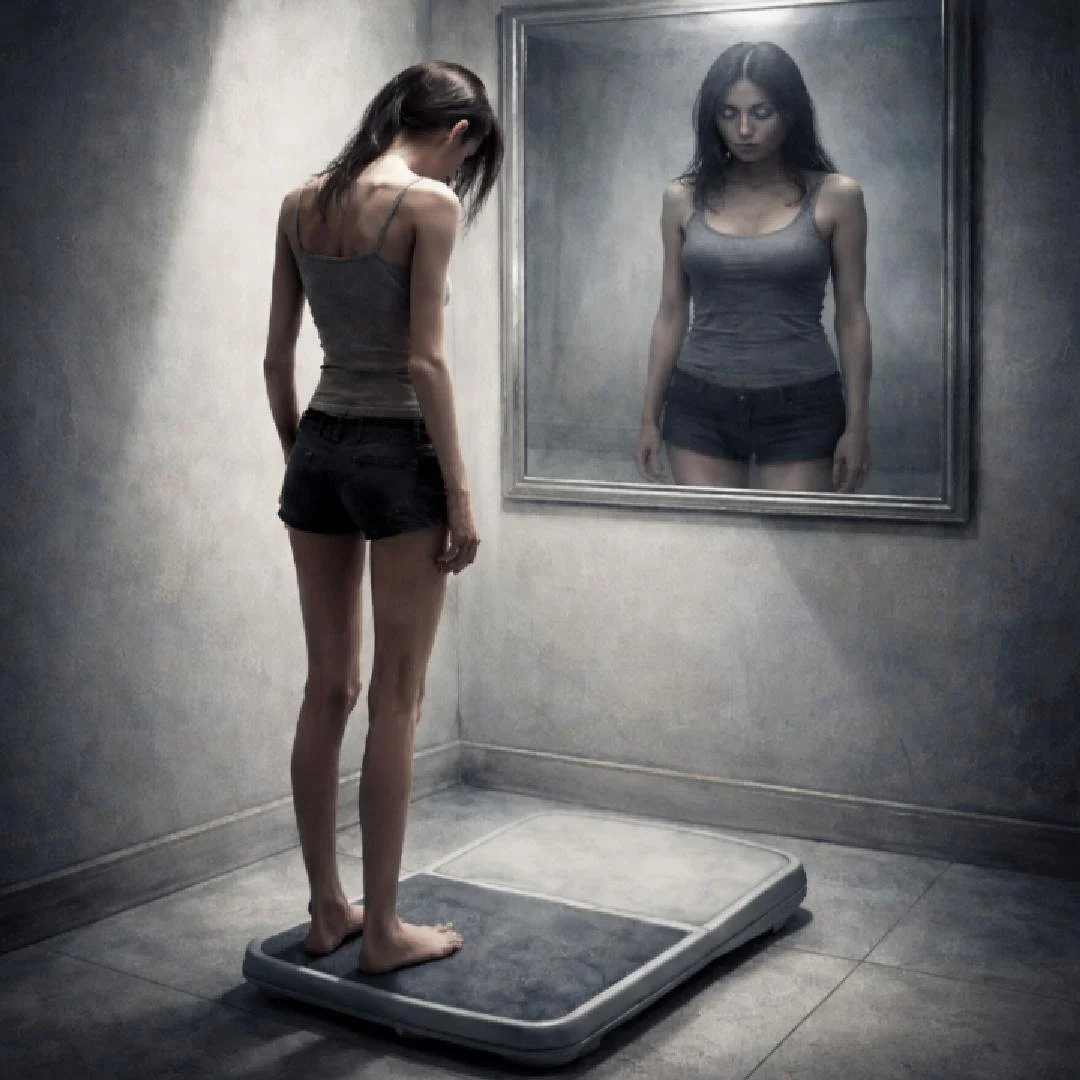
I came from the “look good” family — which meant I had to look perfect on the outside. Everything had to match, from my headband to my socks. I was controlled by what I wore on my body, what I said and didn’t say, and especially what I ate. I was 5’2” and wore a size 6, although my mother and sister wore a size 2. I wasn’t allowed to eat baked potatoes — just peas. No Oreos after school — just apples. I can recall one time when I was starving and asked my mother for an extra half a sandwich. She wouldn’t allow it.
Then the crazy diets began in high school — cottage cheese, fruit, hard-boiled eggs, and matzah. I remember flying to Boston to visit my sister and taking my food with me on the plane. I became embarrassed about my body and was filled with shame. I grew very self-conscious when I ate and felt that I was chubby — although by most people’s standards, I wasn’t.
After my first semester at college, I came home 20 pounds heavier. My mother immediately called our family doctor and got me diet pills — which worked like magic. Not only did they make me talk more, but they also took away my appetite. That was the beginning of a five-year addiction to diet pills and Black Beauties.
After my sophomore year, I transferred colleges and met a woman who would change the course of my life. One day, she gathered all the girls she could from our dorm floor, and we gorged ourselves on snacks from the vending machines. The trick, she said, was to drink a lot of water. We followed her into the bathroom and all stood in separate stalls as she taught each one of us how to throw up: stick two fingers (or more) down your throat and push them back and forth until you vomit.
It was the most exhilarating feeling I had ever had. I could finally eat anything I wanted and still be as thin and perfect as my mother and sister were. That began a new addiction — one that would last the next twenty-five years.
I started binging and purging most days. I used to throw up in trash bags and place them in the incinerator. I had to be very sneaky and quick so my roommate wouldn’t catch me. I began to lose weight — and felt elated. Even though I had a distorted head and body image, I finally got down to a size 2. I thought, maybe now my mother will accept me. Maybe now she’ll be proud of me.
My mother once wrote me a poem in college called “Pounds.” I still remember one part:
“Fat day clothes and skinny day clothes are too much of a bother
And more expense all the time for your lovable father.”
I was so proud of that poem, I hung it up in my dorm room. What was I thinking?
As my disease progressed, I soon discovered laxatives. These were also magical. When I couldn’t vomit all the food that was in me, the laxatives would do the job. After a while — when I couldn’t chew one more piece of Ex-Lax — I discovered Correctol. Those wonderful pink pills. I would drive from one pharmacy to another, too embarrassed to buy such large quantities in one place. I was swallowing sixty pills a night and binging and purging 2–5 times a day.
Things got so out of control that I would eat an entire pizza, a steak sandwich, and a huge tuna fish sandwich — all in one sitting. I even called my car “The Binge Mobile.” I’d drive to McDonald’s, order three hamburgers, nuggets, and fries, and be finished eating by the time I pulled into my driveway.
I couldn’t get the food out of me fast enough. I scratched my stomach so hard while purging that my chest began to bleed.
In the end, I was eating food out of garbage cans in my own house. I stole food from kids’ lunch boxes and from people’s refrigerators. The scale was my best friend — and it went everywhere I did. I was literally crawling from the bathroom to the kitchen, trying to hydrate myself with Gatorade.
My facial glands were swollen. I had sores on the sides of my mouth. My hair was thinning. My skin was breaking out. I had muscle spasms in my legs. I was emaciated.
Nearing death’s door, I finally met another woman who was also bulimic. She encouraged me to go into treatment. When I entered rehab, the staff watched me closely — they thought I might have a heart attack due to years of laxative abuse.
I had been starving myself for so long that the first night I was in treatment, I cried when I felt full. At 42 years old, I had to learn how to eat again. I stayed inpatient for three weeks, outpatient for twelve weeks, and in therapy twice a week for a year.
This long — and sometimes painful — journey has been filled with both torment and joy. But I have now been bulimic-free for eighteen years.
I no longer live in a self-constructed prison. I no longer feel all alone in this world. Through this slow process, I’ve learned I don’t have to be perfect or in control. I don’t live with shame around food anymore. I don’t run from my feelings.
I feel safe in restaurants. I feel safe at parties. I am no longer a hostage to the monster within.
The world I spent so many years feeling terrified of — I’m now part of it. Because I’ve learned to face life on life’s terms. I’ve redefined what it means to eat: I do it to survive. And that acceptance has given new meaning to everything you see on the outside of me — because it only scratches the surface of the woman I’ve become through recovery.